Why Is Booking a Coworking Space in Italy Still So Difficult?
Italy is home to more than 1,100 coworking spaces and flexible offices, yet finding and booking the right workspace can still take days. Discover Marco's real-life experience in Pavia and why the market needs a single access point for flexible workspaces.
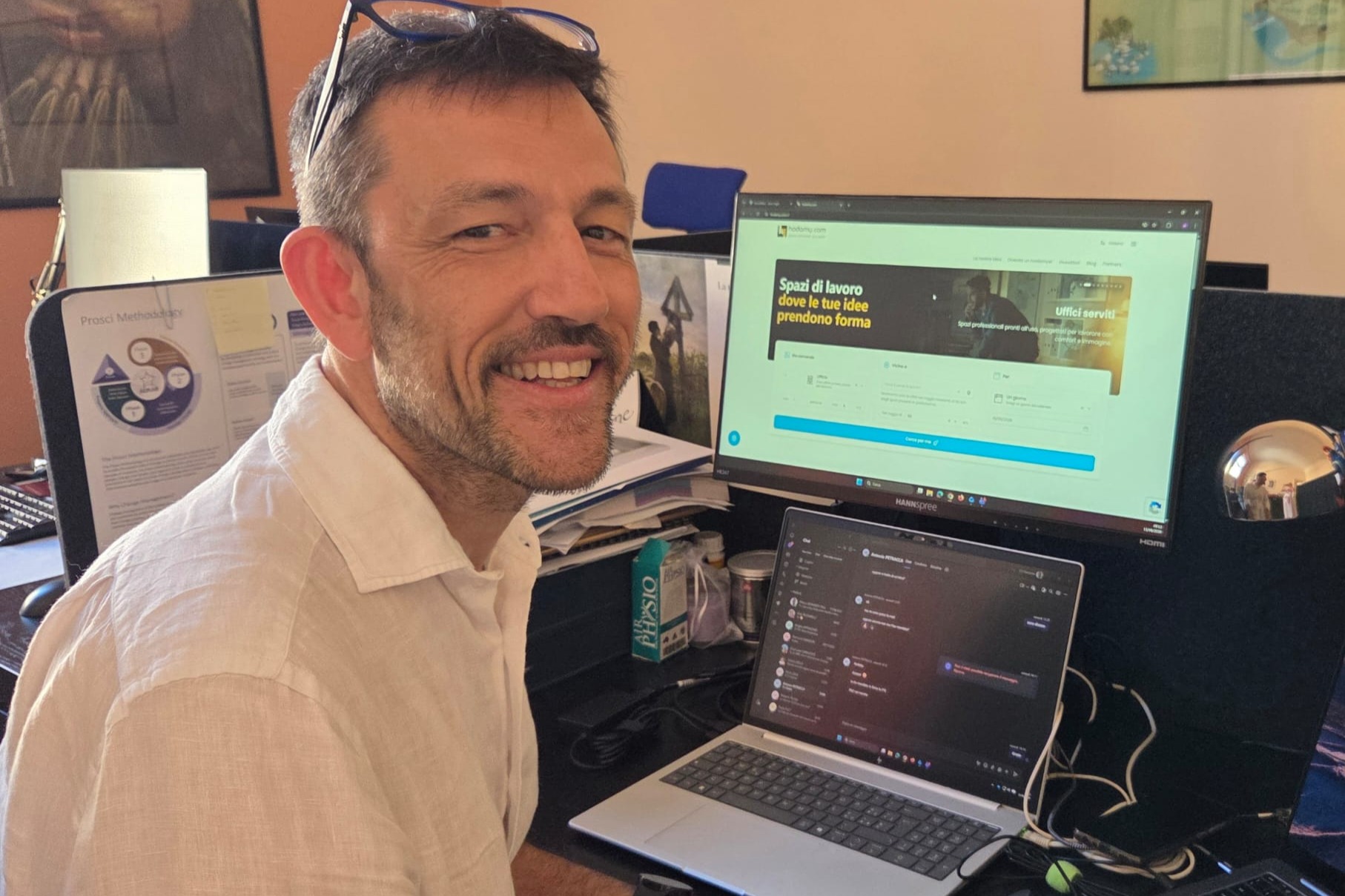
How Long Does It Take to Book a Coworking Space in Italy? A Real-Life Experience of Someone Looking for a Workspace at the Last Minute
Remote and hybrid working have changed the way millions of people work. Yet there is still a problem that receives little attention: finding and booking a professional workspace quickly when it is genuinely needed.
Over the past few years, the supply of coworking spaces, business centers and flexible offices has grown significantly throughout Italy. According to several industry analyses, hundreds of coworking spaces are now available across major cities, smaller towns and rural areas. At the same time, hybrid work continues to expand, increasing the demand for professional workspaces that can be booked for just a few hours or a single day.
However, anyone who has tried to find a coworking space at short notice knows that the process can be far more complicated than it seems.
A Real Story: Finding a Workspace in Pavia
A few months ago, Marco, CTO and co-founder of Hodamy, found himself in a situation familiar to many professionals.
A family member needed to undergo a cycle of cancer treatments in Pavia. Marco wanted to accompany them and stay close by while continuing to work remotely.
The idea seemed simple: find a quiet workspace with a reliable internet connection, preferably close to the healthcare facility.
The search began one evening in front of his computer.
First Google.
Then individual coworking websites.
Then booking platforms.
Then emails and information requests.
Some spaces did not have up-to-date availability online.
Others required advance registration.
Others did not allow immediate booking.
Between phone calls, checks and waiting for responses, the search continued for several days.
Eventually Marco found a suitable solution, but one thing became clear: the issue was not a lack of workspaces. The issue was being able to find and compare them quickly.
The Flexible Workspace Market Has Grown. Accessibility Hasn't.
Today, coworking spaces, business centers, temporary offices, meeting rooms and flexible desks can be found throughout Italy.
Many operators offer excellent services, professional environments, reception services, high-speed internet connections and hourly or daily packages.
However, the market remains highly fragmented.
Each venue uses different tools:
- proprietary websites;
- contact request forms;
- email communications;
- different booking systems;
- availability that is not always updated in real time.
For users, this means visiting multiple websites, comparing inconsistent information and contacting several providers before finding the right solution.
It is a bit like having to book every hotel exclusively through its own website, without any platform allowing users to compare available options quickly.
Why This Problem Affects More and More People
According to the Smart Working Observatory of the Polytechnic University of Milan, hybrid work has become a structural component of modern business organization.
Professionals, consultants, salespeople, technicians and managers increasingly work away from their regular office location.
Their needs can vary significantly:
- a one-day business trip;
- a client meeting;
- a temporary stay in another city;
- the need to work near a healthcare facility;
- a last-minute meeting room booking;
- a workspace between train connections.
In all these situations, the time spent searching for a workspace becomes a hidden cost.
What Should Happen in 2026
Booking a workspace should be as simple as booking a hotel room.
A professional should be able to:
- search by city or specific area;
- view all available options;
- compare prices and services;
- check real-time availability;
- book and pay online within minutes.
The technology already exists. What is still missing is a complete and integrated view of the market.
Hodamy's Challenge
The idea behind Hodamy was born precisely from situations like the one experienced by Marco.
After more than ten years managing flexible workspaces through Vittoria12, we have seen hundreds of professionals face the same challenge: finding the right workspace quickly and efficiently.
Hodamy's goal is to create a single access point for Italian workspaces, allowing users to compare coworking spaces, business centers, temporary offices and meeting rooms through one platform.
The more venues join the network, the easier it becomes for people to find the right workspace, whether they need it for a single day or for a longer period.
The Future of Flexible Workspaces Depends on Simplicity
True innovation does not simply mean increasing the number of coworking spaces available.
Innovation means making those spaces accessible.
When someone needs to accompany a family member to a medical appointment, attend a meeting in another city or manage an unexpected business trip, they should be able to focus on their work rather than on finding a desk.
As the flexible workspace market continues to grow, success will not belong to those who own the most offices, but to those who make them easier to find, compare and book.
And that is precisely the challenge the industry will need to address in the years ahead.
FAQ
How can I find a coworking space near me?
You can use search engines, specialized directories or flexible workspace platforms that allow you to filter by location, services and availability.
How much does a coworking desk cost in Italy?
Prices vary depending on the city and the services included. A daily desk usually costs between €15 and €40, while private offices are generally more expensive.
Can I book a workspace for just one day?
Yes. More and more coworking spaces and business centers offer daily and even hourly booking options.
What is the difference between a coworking space and a business center?
Coworking spaces generally provide shared environments with strong networking opportunities. Business centers often offer private offices, meeting rooms and dedicated business services.